All automotive news in Rwanda
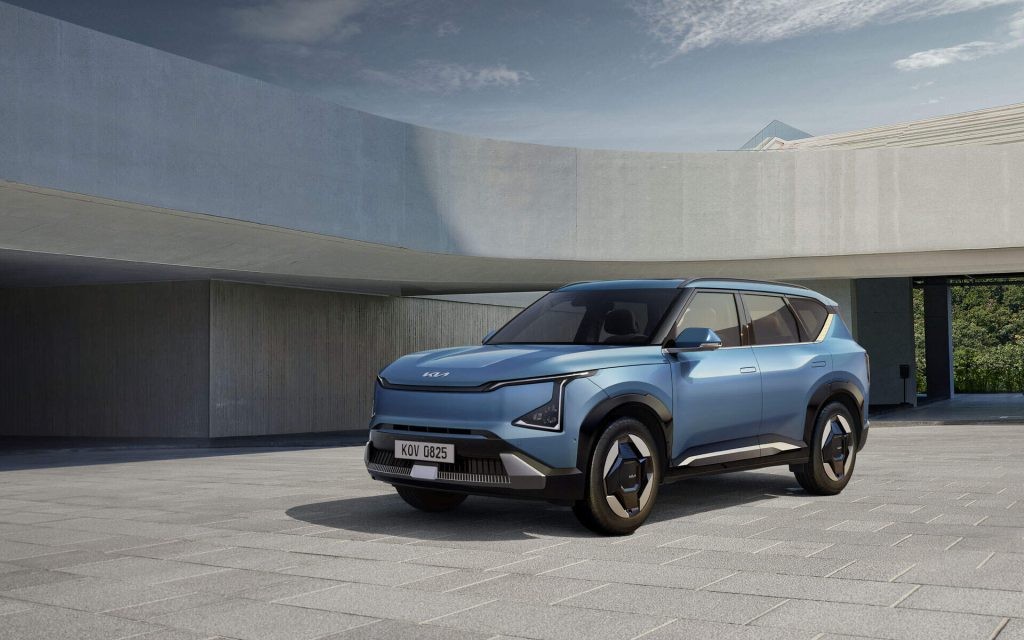
What's New on Koto ?,Tests and Videos | Kia EV5: the family electric SUV
The Kia EV5 doesn't go unnoticed. Its style blends robust lines with nature-inspired forms. This contrast results in a SUV that is both solid and elegant, perfectly suited for drivers looking for a modern vehicle that adapts just as well to city driving as to the more demanding roads of Rwanda. With this approach, Kia offers a model that stands out from the crowd while remaining practical for everyday use.
A spacious interior designed with families in mind
[gallery link="file" columns="2" size="full" ids="15753,15754,15758,15759"]
Inside, the Kia EV5 prioritises comfort and modularity. The cabin feels like a living room, with generous space for all passengers. The rear seats fold completely flat, making it easy to transform the interior based on your needs, whether you're carrying luggage or taking a rest during a break.
Rear passengers also benefit from excellent legroom, an important feature for Rwandan families who often travel long distances. Up front, the Premium Relaxation seats offer heating, ventilation, and even a massage function for the driver. Practical details like the sliding centre console and well-thought-out storage compartments make daily use of the vehicle even more enjoyable.
Range and charging: built for modern usage
The Kia EV5 is built on a modern electric platform that delivers solid range and efficient charging. It can travel up to approximately 530 km on a single charge, easily covering daily commutes and intercity journeys across Rwanda. Its towing capacity reaches 1,200 kg, a clear advantage for those who regularly transport equipment or occasional loads.
This SUV goes even further with smart technologies such as:
Charging external devices (V2L)
Powering a home (V2H)
Exchanging energy with the grid (V2G)
These features allow you to use the vehicle's energy well beyond simply driving.
[idcarversion=991]
On-board technology: a connected experience
[gallery link="file" columns="2" size="full" ids="15755,15756,15760,15757"]
The Kia EV5 offers a comprehensive technology package designed to simplify driving:
Kia Intelligent Assistant (AI)
Triple panoramic screen for clear information display
Premium Harman Kardon audio system
Digital key with fingerprint recognition
Integrated streaming services
Customisable ambient lighting
Everything is designed to deliver a modern, intuitive, and enjoyable experience even on long journeys.
Safety and advanced driver assistance
On the safety front, the Kia EV5 comes equipped with several driver assistance systems that make driving easier and reduce road risks:
Remote parking assistance
Intelligent speed limiter
Highway driving assist
Rear obstacle detection during manoeuvres
Blind spot monitoring
These technologies are particularly useful in urban areas like Kigali.
[idcarversion=991]
Why is the Kia EV5 a smart choice in Rwanda?
The Kia EV5 stands out as a compelling option for Rwandan drivers looking to go electric without compromise. It combines range, space, comfort, and modern technology while remaining well-suited to family needs.
With the gradual expansion of charging infrastructure across East Africa, this type of SUV represents a logical step towards cleaner, more cost-effective mobility in the long run.
[embed]https://www.youtube.com/watch?v=BV8iPotI7eY[/embed]
[idcarversion=991]
FAQ
What is the real-world range of the Kia EV5 in Rwanda?
The Kia EV5 can achieve up to 530 km on the WLTP cycle. Under real driving conditions in Rwanda, range will depend on terrain, driving style, and air conditioning use, but it remains more than sufficient for daily and intercity travel.
Is it easy to charge a Kia EV5 in Rwanda?
Charging infrastructure is gradually expanding. It is possible to charge at home or at certain public charging points, particularly in major cities like Kigali.
What are the benefits of an electric SUV like the Kia EV5?
An electric SUV offers lower maintenance costs, quiet driving, zero local emissions, and savings on fuel. It also provides excellent comfort for the whole family.

Practical Tips | How to choose the ideal family car in Rwanda?
Finding the perfect family car isn’t always simple. Between daily routines, long road trips, and budget constraints, several factors must be carefully considered. Here is a clear guide to help you make the right choice, adapted to the realities of the Rwandan market.
Choose based on your family size
First and foremost, consider your specific situation. A small family won't have the same needs as a household with three or four children. If you frequently transport several passengers or a lot of luggage, prioritize a spacious vehicle.
SUVs and minivans are highly popular in Rwanda, particularly for their ability to adapt to both city driving and more demanding roads. They offer more cabin space and better comfort for all passengers.
Safety: an essential criterion
Safety must remain a priority. A family car must be able to effectively protect all its occupants. Take the time to check the available features. Systems such as emergency braking, stability control, and multiple airbags reinforce protection in case of the unexpected.
Today, even some affordable models offer impressive technology to help you drive your family with peace of mind.
Managing your Daily budget
In Rwanda, the total cost of ownership is a key factor. It’s not just about the initial purchase price. Fuel consumption, maintenance, and the availability of spare parts must be taken into account. An economical vehicle will allow you to reduce expenses in the long run. Models renowned for their reliability are often the best choices for regular family use.
Focus on comfort and features
Family trips can quickly become tiring if comfort is neglected. Reliable air conditioning is indispensable, especially on hot days. Comfortable seats, sufficient legroom, and a quality audio system can make a real difference. For long journeys, features like rear screens or USB charging ports are also very practical.
Which family cars can you find on Koto.rw?
On Koto.rw, several models are perfectly suited for family use. Here are a few popular examples in the rwandan market:
Toyota RAV4
[gallery columns="2" link="file" size="full" ids="10446,10442,10444,10443"]
This SUV is highly regarded for its reliability and robustness. It offers great interior space, making it ideal for families, while fuel consumption remains reasonable for its category. Whether in the city or on country roads, it is a safe and dependable choice for daily use.
[idcarversion=978]
[idcarversion=979]
Toyota Land Cruiser Prado
[gallery link="file" columns="2" size="full" ids="14634,14635,14637,14638"]
The Prado is designed for families seeking power and space. Depending on the version, it offers up to 7 seats. Its comfort is remarkable even on rough terrain. A sturdy vehicle built for long trips, it remains the gold standard for large families.
[idcarversion=980]
In Summary
Choosing a family car requires careful thought. You need to find the right balance between space, safety, budget, and comfort. By taking the time to evaluate your needs and exploring the models available on Koto.rw, you can easily find the vehicle that will support your family’s daily life, whether in the heart of the city or on the scenic roads of Rwanda.

Practical Tips | 4x4 Models: understanding the essentials before you choose
Are you looking for a vehicle capable of driving anywhere without the stress? The term "4x4" appears often in listings, but it isn't always fully understood. Here is a simple guide to help you learn what it really is, how it works, and if it’s the right choice for you in Rwanda.
What is a 4x4 vehicle?
A 4x4, or four-wheel-drive vehicle, is a car that sends engine power to all four wheels simultaneously. Unlike standard models (front-wheel or rear-wheel drive), this technology allows for better grip on the road. In practical terms, this provides:
More efficient traction
Better stability
The ability to drive on difficult terrain
Depending on the system used, people also sometimes refer to this as All-Wheel Drive (AWD).
How does a 4x4 work?
A 4x4 vehicle relies on several key mechanical components:
A transfer case
Differentials (front and rear)
Sometimes a center differential
The transfer case distributes power between the front and rear wheels. Depending on the model, the operation can vary:
Full-time 4x4: All four wheels are always active.
Part-time 4x4: You activate the mode manually depending on the terrain.
AWD (Automatic): The system adapts on its own.
Models like the Toyota Land Cruiser or the Jeep Wrangler are well-known for their off-road efficiency.
Why choose a 4x4 in Rwanda?
Better handling on difficult roads
In Rwanda, some roads can be unpaved, muddy, or rugged. A 4x4 allows you to drive more confidently in these conditions.
Increased safety
When the road becomes slippery (rain, mud), the vehicle remains more stable. This reduces the risk of losing control.
A versatile vehicle
A 4x4 adapts to multiple uses:
City commuting
Long road trips
Rural areas or construction sites
It is an excellent choice for families, professionals, or those who frequently travel outside of Kigali.
Limitations to keep in mind
Higher fuel consumption
The system is heavier. As a result, fuel consumption increases, especially during city driving.
More demanding maintenance
More mechanical parts mean more monitoring and, occasionally, higher costs.
Higher purchase price
4x4 versions are often more expensive than two-wheel-drive models.
4x4 vs. SUV: don’t get them confused
Confusion is common between these two terms:
SUV: A type of vehicle (high-clearance design)
4x4: A type of drivetrain/transmission
Therefore, an SUV can be:
2-wheel drive
Or 4-wheel drive
In other words, not all SUVs are 4x4s.
Is a 4x4 right for you?
This type of vehicle is recommended if you often drive off paved roads, you live in rural or hilly areas, you carry heavy loads and you are looking for extra safety on the road. On the other hand, for strictly urban use, a simple front-wheel-drive model may be sufficient and more cost-effective.
Find your 4x4 on koto.rw
On koto.rw, you can compare several 4x4 models adapted to the realities of Rwanda. Whether you are looking for a robust vehicle for work or a comfortable family SUV, you will find options to suit your budget. Take the time to compare and choose a model that truly matches your lifestyle.

Tests and Videos | Leapmotor C10: an electric SUV to discover in Rwanda
The Rwandan automotive market is evolving fast. Drivers today are looking for modern, cost-effective, and well-equipped vehicles. In this context, the Leapmotor C10 arrives with a clear proposition: a spacious, technology-driven, and reassuring electric SUV.
A bold design, built for Kigali
[gallery link="file" columns="2" size="full" ids="16655,16656,13552,13550"]
Its balanced front end, highlighted by automatic LED headlights, gives it a modern and confident signature. The dynamically styled rims reinforce its sporty look. In profile, the sculpted lines create a sense of motion.
At the rear, an aeronautics-inspired spoiler improves aerodynamics while enhancing its character. This is an SUV that inspires confidence, whether in the city or beyond Kigali, on the country's hilly roads.
[idcarversion=997]
[idcarversion=996]
A spacious and luminous interior
Inside, the C10 focuses on simplicity and comfort. The cabin feels open and airy. The flat floor frees up more space for rear passengers, a real advantage for families. The driver benefits from a large 14.6-inch floating HD central touchscreen, paired with a 10.25-inch digital dashboard.
Everything is clear, modern, and easy to use. The front seats are electrically adjustable. The leather-wrapped steering wheel adds a premium touch. And the panoramic glass roof, with an electric sunshade, floods the cabin with natural light.
[gallery link="file" columns="2" size="full" ids="16593,16594,13551,16657"]
Smart technology and remote updates
The Leapmotor C10 works a little like a smartphone. Thanks to over-the-air (OTA) updates, the system updates automatically. No need to visit a workshop to benefit from the latest improvements.
Connectivity is seamless. Voice commands, front wireless smartphone charging, intuitive interface. The 12-speaker audio system delivers a remarkable sound experience. Customizable ambient lighting creates a pleasant atmosphere, especially during night drives.
The C10 integrates advanced driver assistance systems. These technologies support the driver and enhance safety . Quiet, stable, and comfortable, this electric SUV turns every journey into a moment of relaxation.
Why could the Leapmotor C10 win over Rwanda?
100% electric SUV, suited for modern urban mobility
Spacious cabin for families
Latest-generation technology
Backed by a major international automotive group
High-level comfort
The Leapmotor C10 represents a new way of driving: cleaner, more connected, more serene.
[embed]https://www.youtube.com/watch?v=rU5g_-1x5A8[/embed]
[idcarversion=997]
[idcarversion=996]
FAQ
Can the Leapmotor C10 be easily charged in Rwanda?
The C10 can be charged at home with a suitable charging point or at available public infrastructure. The rollout of charging stations is gradually progressing across the country.
Are system updates free of charge?
The vehicle benefits from over-the-air (OTA) updates. These allow the system to be improved without visiting a dealership. Conditions may vary depending on the local distributor.
Is the Leapmotor C10 a family vehicle?
Yes. Its spacious cabin, flat floor, and generous boot make it an SUV well suited to Rwandan families.

Practical Tips | How much does it cost to install a home EV charging station in Rwanda in 2026 ?
With the rise of electric vehicles in Rwanda, many drivers are asking the same question: how much should you budget to install a charging station at home? In 2026, the average budget ranges from 300,000 to 800,000 Rwandan francs (approximately $220 to $590). This typically includes the equipment and installation. In practice, however, the final cost will depend mainly on the type of charger chosen and the condition of your existing electrical setup.
What should you actually budget for ?
For a standard home without major structural work, installing a domestic charging station remains affordable.
Charger + basic installation : 300,000 to 800,000 RWF
Additional work (panel upgrade, new circuits, long cable runs) : costs can rise significantly
In some cases, particularly in older homes, the total amount can exceed 3,000,000 RWF if a full electrical panel overhaul is required.
Good news : the Rwandan government actively supports electric mobility. Imported charging equipment is VAT-exempt until June 30, 2028, and electricity used for charging is billed at the more favorable industrial rate.
Level 1 or level 2 charger : which should you choose?
The choice depends mainly on your daily driving habits.
Level 1: simple and budget-friendly
A level 1 charger plugs into a standard outlet. It provides approximately 4 to 5 km of range per hour of charging. It is suitable for drivers who travel fewer than 60 km per day.
Most electric vehicles sold in Rwanda, including BYD models through CFAO Mobility, come with a portable 3.3 kW adapter compatible with a standard outlet. It's the simplest solution, requiring no major electrical work.
Level 2: faster and more convenient
The Level 2 charger is now the standard for home use in Rwanda. A 7 kW installation can fully charge most vehicles overnight and offers better energy efficiency (around 90%).
It does require:
A dedicated circuit
Sometimes an electrical panel upgrade
Installation by a licensed professional
Another advantage: smart charging. Some chargers allow you to schedule charging during off-peak hours via a mobile app, an important feature in Kigali, where the electrical grid reached 136% of its maximum load capacity in 2024.
If you drive more than 65 km per day, a Level 2 charger is strongly recommended.
Cost breakdown: equipment and installation
Charger prices
Level 1 : typically included with vehicle purchase
Level 2 (7 kW) : between 650,000 and 3,250,000 RWF depending on brand and features
Some dealerships offer complete packages. CFAO Mobility, for example, includes a 7 kW wall charger in certain electric vehicle offers.
Installation costs
Professional installation averages between 300,000 and 800,000 RWF. The price varies depending on:
The distance between the electrical panel and the parking area (10 meters is the standard)
The condition of the electrical panel
The amount of wiring work required
A note on regulations: use a licensed professional
All work must be carried out by an electrician certified by the RURA.
Class A license : standard residential installations
Class B license : higher-powered installations
Licensing fees (30,000 to 100,000 RWF) are generally included in the quote. Verifying this certification is essential to ensure the safety of your installation.
Concrete budget examples
Case 1: purchasing an EV Through a dealership
If you purchase your electric vehicle through CFAO Mobility, the 7 kW wall charger and portable adapter may be included. In that case, you would mainly need to budget for:
Any necessary electrical upgrades
Annual road tax of 50,000 RWF
Case 2: independent installation
7 kW charger: 700,000 to 2,100,000 RWF
Installation: 350,000 to 1,000,000 RWF
Possible electrical panel upgrade: 700,000 to 2,800,000 RWF
Wiring and permits: 200,000 to 700,000 RWF
Costs can quickly exceed 2,500,000 RWF depending on the complexity of the job.
Is home charging really worth it?
Yes. Home charging is generally 30 to 50% cheaper than using a public charging station. By scheduling charging during off-peak hours, you can reduce your bill even further while helping to stabilize the national electrical grid.
In summary
Installing a home EV charging station in Rwanda in 2026 remains a reasonable investment, especially when compared to the savings on fuel.
Before getting started:
Assess your driving habits
Check your home's electrical capacity
Compare dealership offers
Hire a RURA-certified electrician
With proper preparation, you'll enjoy a reliable, safe system that's well-suited to the growth of electric mobility in Rwanda.
FAQ
What is the average cost of installing a home EV charging station in Rwanda?
In 2026, you should budget between 300,000 and 800,000 Rwandan francs for a standard installation. Costs can increase if additional electrical work is required.
Is a charger included when purchasing an electric vehicle?
Yes, some dealerships such as CFAO Mobility include a 7 kW wall charger and a portable charger with their electric vehicles.
Do you need a permit to install a charging station?
Yes. Installation must be carried out by an electrician licensed by the RURA in order to comply with current safety standards.
What is the difference between a Level 1 and a Level 2 charger?
A Level 1 charger plugs into a standard outlet and charges slowly. A Level 2 charger is faster, requires a dedicated circuit, and is better suited to drivers who cover longer distances each day.
Is home charging more economical than using a public charging station?
Yes. Home charging is generally 30 to 50% cheaper, especially if you take advantage of off-peak hours.

Practical Tips | Regular maintenance: a pillar of road safety in Rwanda
In Rwanda, the vehicle fleet grows every year. Roads are improving, there are more vehicles on the road, and journeys are more frequent. In this context, safety does not depend solely on the driver. It also depends on the condition of the vehicle. Many breakdowns and accidents could be prevented through serious preventive maintenance. A comprehensive periodic check, often called a tune-up, keeps your car in good shape and helps you avoid unpleasant surprises.
What does a periodic service actually involve?
Regular maintenance is not limited to a simple oil change. It is a comprehensive inspection of the vehicle's essential components:
The engine: spark plugs, filters, belts
The braking system
Various fluids (oil, coolant, brake fluid)
The battery and electrical system
Tires and tire pressure
These checks ensure the vehicle operates at its best. They reduce the risk of sudden breakdowns, especially on long journeys across the country. A well-maintained car is more reliable, safer, and more pleasant to drive.
Why maintenance directly improves safety
Regular maintenance plays an important role in accident prevention. Here are the most important points.
Effective brakes in every situation
Worn brake pads or degraded brake fluid increase stopping distances. Regular inspection ensures a quick response, especially in heavy traffic.
Better visibility on the road
Functioning and properly adjusted headlights are essential, particularly on routes between Kigali and Musanze, where fog and darkness can catch drivers off guard.
More stable road handling
Rwanda's hilly and sometimes uneven roads put significant strain on suspensions and tires. Poor wheel balancing or worn shock absorbers can compromise vehicle stability.
A reliable battery
A weak battery can leave your car stranded at the worst possible moment. A simple test can prevent this inconvenience.
Regular maintenance: a real financial saving
Some drivers put off services to save money. In reality, the opposite is often true.
An undetected small oil leak can lead to a costly engine failure.
A poorly tuned engine uses more fuel.
A complete service history increases the vehicle's resale value.
In Rwanda, where the second-hand market is very active, a maintenance record reassures buyers.
How often should your vehicle be serviced?
As a general rule, a full inspection is recommended every 10,000 to 15,000 kilometres, or at least once a year. However, it all depends on how you use your vehicle:
Frequent urban driving in Huye or Kigali: repeated braking, faster wear.
Rural or mountainous roads: greater strain on the engine and suspension.
Adapting the frequency of your services to your driving habits is essential.
What about electric vehicles?
Electric vehicles are gaining ground in Rwanda. Their maintenance is different, but equally important. The key checks concern the battery system, regenerative brakes, and software updates.
To explore electric models suited to the local market, the EV24.africa platform offers import solutions designed for Africa.
Where to get your vehicle serviced in Rwanda?
The country now has many qualified garages specialising in preventive maintenance. On Carisoko.com, for example, you can find reliable partner workshops suited to your vehicle. For local automotive news and practical advice, also visit Automag.rw.
Koto.rw is part of the Africar Group network, an automotive ecosystem present in more than 20 African countries. This network enhances service quality and access to reliable information for Rwandan drivers.
FAQ
How often should I service my car in Rwanda?
Generally, a full inspection is recommended every 10,000 to 15,000 km or once a year. However, if you frequently drive in the city or on mountain roads, it may be worth having your vehicle checked more regularly.
What are the most important safety checks?
Brakes, tires, fluid levels, and the battery are the top priorities. These are what directly affect the vehicle's ability to stop, hold the road, and start without issue.
Do electric vehicles need maintenance too?
Absolutely. Even though they have fewer mechanical parts, the battery, regenerative braking system, and recommended software updates still need to be monitored.
Where can I find a reliable garage in Rwanda?
Local automotive platforms can help you identify serious, specialised partner workshops. It is advisable to choose a recognised garage and to request an up-to-date service logbook.

Tests and Videos | BYD Tang : Long range driving and fast charging for rwandan roads
The electric SUV market is growing rapidly in East Africa. In Rwanda, interest in clean and modern vehicles continues to rise. The BYD Tang fully fits into this trend. This electric SUV combines extended driving range, solid performance, and modern technologies, making it a serious alternative to traditional combustion-engine SUVs.
A high performance battery for longer journeys
[gallery link="file" columns="2" size="full" ids="16575,16576,16574,16573"]
The BYD Tang is equipped with BYD’s well-known Blade Battery, recognized for its reliability and safety. Two battery capacities are available: 108.8 kWh and 86.4 kWh. In its most efficient version, the SUV offers a driving range of up to 530 km (WLTP). This is a real advantage for Rwandan drivers who frequently travel between Kigali and other regions of the country. The long range reduces the need for frequent charging and makes the vehicle more practical for everyday use.
Fast charging : less waiting, more freedom
The BYD Tang does not rely on range alone. It also features efficient fast-charging capability. With a charging power of up to 170 kW, the battery can be charged from 30% to 80% in around 30 minutes. This allows drivers to get back on the road quickly, especially during long-distance trips. As charging infrastructure continues to develop in Rwanda, this level of performance becomes a major asset.
[idcarversion=986]
A 7-Seater SUV designed for families
[gallery link="file" columns="2" size="full" ids="16572,16571,16570,16569"]
Above all, the BYD Tang is a spacious and versatile SUV. It offers 7 seats, making it ideal for large families or professionals who need extra space.
The trunk capacity includes :
655 liters in standard configuration
Up to 940 liters with the rear seats folded
Around 235 liters with all seats in use
The interior is well finished, with quality materials and good sound insulation, ensuring a comfortable driving experience on Rwandan roads.
[idcarversion=986]
Connectivity and onboard technologies
Inside, the BYD Tang focuses on simplicity and efficiency. The infotainment system has been updated for intuitive use. Compatibility with Apple CarPlay and Android Auto allows easy access to navigation, calls, and music. Everything is designed to keep drivers connected without unnecessary complexity.
Advanced safety for peace of mind
Safety is a key strength of this model. The BYD Tang is equipped with several modern driver-assistance systems:
Automatic emergency braking
Lane departure warning
Blind-spot monitoring
Lane-keeping assistance
These technologies enhance road safety and provide greater peace of mind for the driver.
[embed]https://www.youtube.com/watch?v=BSBgj6pHUXc[/embed]
In conclusion
The BYD Tang stands out as a well-rounded electric SUV. It combines comfortable driving range, fast charging, strong performance, and generous interior space. For the Rwandan market, it represents a modern solution that meets current needs and supports the ongoing transition to electric mobility. BYD once again confirms its ambition to become a major player in the electric vehicle market in Africa.
[idcarversion=986]

Practical Tips | Are Kia cars a good choice in Rwanda ?
In Rwanda, more and more motorists are showing interest in the Kia brand. It can be seen both in the city and outside Kigali, on sometimes demanding roads. But one question often comes up before purchase: are Kias really good cars? Reliability, safety, cost, features... let's take a straightforward look.
An accessible brand well-positioned on price
One of Kia's main advantages remains its attractive pricing. With equivalent features, Kia models often cost less than those of competing brands. This is an important point in Rwanda, where budget remains a key criterion when purchasing a vehicle.
Models like the Kia Sportage or Kia Sorento offer a good level of comfort and technology without breaking the bank. This positioning also helps reduce certain ancillary costs, such as insurance.
Modern features, even on affordable versions
Kia has made significant efforts on onboard technology. Even on mid-range trims, you'll find touchscreens, driving aids, and connectivity systems that are practical for daily use. For example, the Kia EV5, which is 100% electric, illustrates this technological upgrade well with a modern interface and driving aids designed for urban driving. An asset for those who often drive in Kigali.
Safety: a reassuring point for drivers
Kia vehicles generally achieve good results in international safety tests. Recent models include features such as emergency braking, lane-keeping assist, and collision warnings. On SUVs like the Sorento, these systems provide real peace of mind, especially for families or long trips on national roads.
Generally reliable engines, with some precautions
Kia engines are developed in collaboration with Hyundai. Overall, they're capable of covering many kilometers if properly maintained. However, some older models have experienced mechanical issues. It therefore remains important to check the vehicle's history, especially for an imported used car.
Body and durability over time
Kias are often appreciated for their good resistance to rust, an important point in certain humid areas. Models such as the Sportage show good durability with normal maintenance. Even though the brand has had some recalls in the past, the overall manufacturing quality has significantly improved in recent years.
Performance suited to Rwandan roads
Kia doesn't only offer city cars. The range also includes SUVs capable of venturing onto less well-paved roads. The Kia Sportage, for example, offers a good compromise between urban comfort and versatility, while the Sorento is better suited for families or longer trips.
Verdict: Kia, a smart choice in Rwanda ?
Yes, Kia is now a serious and competitive brand. It appeals through its value for money, modern features, and a varied range that meets local needs. As with any car purchase, it remains essential to choose the model carefully and check the vehicle's condition, especially in the used car market.
Source : carisoko.com

Practical Tips | Hybrid or gasoline car in Rwanda : which choice is really smarter ?
With new taxes, evolving environmental policies, and the reality of driving in Kigali and the provinces, choosing between a hybrid and a gasoline car deserves careful thought. The right vehicle depends mainly on your daily use, your budget, and your long-term vision.
Understanding the difference between hybrid and gasoline
A gasoline car works in the traditional way: a combustion engine, fuel, and nothing else. It's a well-known technology, mastered and widely available in Rwanda. A hybrid car combines two systems: a gasoline engine and an electric motor powered by a battery. The car automatically chooses the best energy source depending on the situation.
At low speeds, it's often the electric motor that works. When power is needed, the gasoline engine takes over. Braking also helps recharge the battery, without plugging in for standard hybrids.
Hybrids and rwandan reality
In Kigali's traffic jams, hybrids clearly show their strengths. At low speeds, they consume very little fuel. Result: fewer trips to the gas station and better-controlled fuel expenses. They're also quieter and more pleasant to drive in the city.
Environmentally, a recent hybrid emits significantly less CO₂ than a gasoline car. This aligns well with Rwanda's environmental ambitions. But be careful: it all depends on the vehicle's age. Many imported hybrids are old. With a worn-out battery, the car functions almost like a regular gasoline vehicle, with no real advantage.
Another important point: since 2025, hybrids no longer benefit from the same tax advantages. The 18% VAT is back, with excise duties based on the vehicle's age. Hybrids remain worthwhile, but only if they're recent.
Why gasoline cars remain very present
Gasoline cars maintain a solid position in the Rwandan market. Their first advantage is clear: they cost less to purchase. For many households, this is a decisive factor.
Maintenance is also simpler. Mechanics know these engines well, parts are available everywhere, including outside Kigali. For drivers in rural areas or those covering long distances, this is reassuring.
However, fuel consumption is higher, especially in the city. And Rwandan authorities are gradually seeking to limit the use of the most polluting vehicles, which could make gasoline cars more expensive in the future.
Real cost Over several years : what many people forget
At purchase, gasoline wins. But over five years, the gap narrows. A hybrid consumes almost half as much fuel. It wears out brakes less and puts less strain on its combustion engine. Result: often lower maintenance costs.
That said, a degraded battery can quickly cancel out these savings. That's why buying an old hybrid is rarely a good idea in Rwanda.
If you mainly drive in Kigali, a recent hybrid remains a good choice. It's comfortable in traffic jams and helps reduce daily expenses. If you live or frequently drive outside major cities, a gasoline car remains simpler to manage. No battery concerns, no dependence on specialized maintenance.
There's no single answer. A recent hybrid suits urban drivers willing to invest more upfront to save later. A gasoline car remains ideal for controlled budgets and varied routes.
Clear advice : avoid hybrids over eight years old. They're expensive in taxes and offer few real advantages. And if your priority is the environment, a 100% electric vehicle is becoming a serious option, especially with tax exemptions still in place.

| Chery arrives in Rwanda with affordable hybrid and electric SUVs
Chinese automaker Chery, globally recognized for its innovations and award-winning models, is entering Rwanda by offering a range of accessible hybrid and electric SUVs. This arrival aligns with the country's growing trend toward sustainable mobility and highlights Africa's interest in new, economical, and modern vehicles.
Introduction of the Tiggo series SUVs
Chery is introducing the Tiggo 4 Pro, Tiggo 7 Pro, and Tiggo 8 Pro Max models to Rwanda. These SUVs combine advanced technology, modern design, and comfort to meet the needs of Rwandan drivers, whether in the city or on national roads. Prices start at approximately $30,200 (3.9 million Kenyan shillings), and each vehicle comes with a 7-year or 200,000 km warranty, among the most generous in the local market.
These models offer smart connectivity, advanced safety systems, and efficient, economical powertrains, allowing drivers to enjoy a modern vehicle with reduced costs and cleaner emissions.
A new dynamic for the automotive market
Chery's arrival represents a bold bet on a market long dominated by imported used vehicles. While the latter continue to grow each year, the brand is banking on new, reliable, and technological models to convince Rwandan consumers to switch to new vehicles.
Looking ahead, Chery plans to start local assembly in Rwanda by 2026, aligning with the "Buy Rwandan, Build Rwandan" philosophy. This initiative could create jobs, develop local industrial expertise, and support the country's ambitions for industrialization and green mobility.
Electric mobility takes root in Africa
The African region is experiencing rapid growth in electric vehicles. In South Africa, Chinese brands like BYD and Leapmotor are expanding through local assembly and advanced batteries. In Nigeria, initiatives around CNG are being explored with international partners.
Projections show that the African electric vehicle market could grow from $0.45 billion in 2025 to $4.2 billion in 2030, driven by government incentives and access to battery resources, offering African consumers new clean and economical alternatives. Chery's arrival in Rwanda marks a turning point: electric mobility is becoming concrete, new and economical vehicles are within reach, and global innovation meets local ambition.
The Tiggo 4 Pro, Tiggo 7 Pro, and Tiggo 8 Pro Max models will soon be available on the Koto.rw website.
Source :
https://techspace.africa
1
2
3