All automotive news in Rwanda
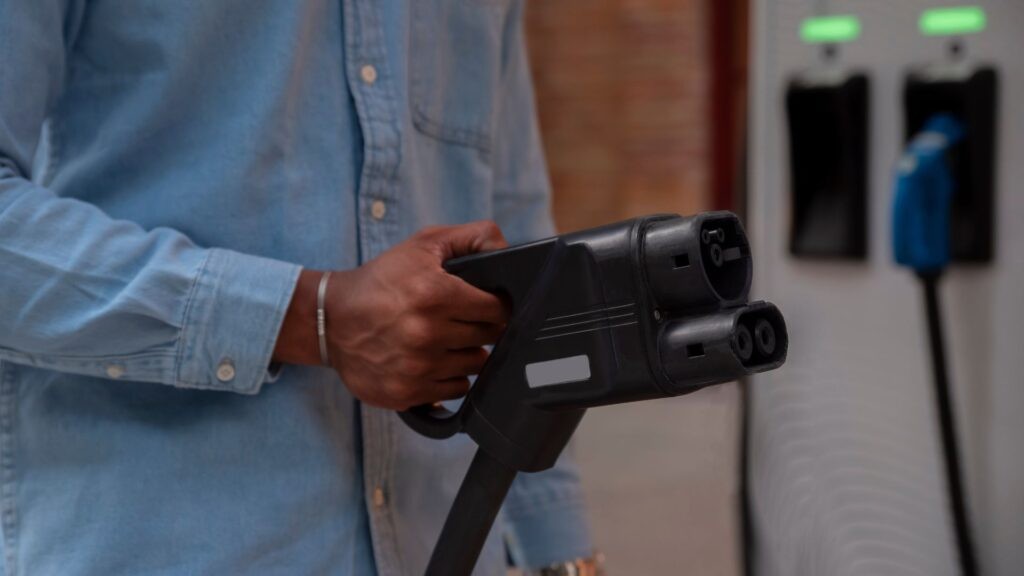
Practical Tips | How much does it cost to install a home EV charging station in Rwanda in 2026 ?
With the rise of electric vehicles in Rwanda, many drivers are asking the same question: how much should you budget to install a charging station at home? In 2026, the average budget ranges from 300,000 to 800,000 Rwandan francs (approximately $220 to $590). This typically includes the equipment and installation. In practice, however, the final cost will depend mainly on the type of charger chosen and the condition of your existing electrical setup.
What should you actually budget for ?
For a standard home without major structural work, installing a domestic charging station remains affordable.
Charger + basic installation : 300,000 to 800,000 RWF
Additional work (panel upgrade, new circuits, long cable runs) : costs can rise significantly
In some cases, particularly in older homes, the total amount can exceed 3,000,000 RWF if a full electrical panel overhaul is required.
Good news : the Rwandan government actively supports electric mobility. Imported charging equipment is VAT-exempt until June 30, 2028, and electricity used for charging is billed at the more favorable industrial rate.
Level 1 or level 2 charger : which should you choose?
The choice depends mainly on your daily driving habits.
Level 1: simple and budget-friendly
A level 1 charger plugs into a standard outlet. It provides approximately 4 to 5 km of range per hour of charging. It is suitable for drivers who travel fewer than 60 km per day.
Most electric vehicles sold in Rwanda, including BYD models through CFAO Mobility, come with a portable 3.3 kW adapter compatible with a standard outlet. It's the simplest solution, requiring no major electrical work.
Level 2: faster and more convenient
The Level 2 charger is now the standard for home use in Rwanda. A 7 kW installation can fully charge most vehicles overnight and offers better energy efficiency (around 90%).
It does require:
A dedicated circuit
Sometimes an electrical panel upgrade
Installation by a licensed professional
Another advantage: smart charging. Some chargers allow you to schedule charging during off-peak hours via a mobile app, an important feature in Kigali, where the electrical grid reached 136% of its maximum load capacity in 2024.
If you drive more than 65 km per day, a Level 2 charger is strongly recommended.
Cost breakdown: equipment and installation
Charger prices
Level 1 : typically included with vehicle purchase
Level 2 (7 kW) : between 650,000 and 3,250,000 RWF depending on brand and features
Some dealerships offer complete packages. CFAO Mobility, for example, includes a 7 kW wall charger in certain electric vehicle offers.
Installation costs
Professional installation averages between 300,000 and 800,000 RWF. The price varies depending on:
The distance between the electrical panel and the parking area (10 meters is the standard)
The condition of the electrical panel
The amount of wiring work required
A note on regulations: use a licensed professional
All work must be carried out by an electrician certified by the RURA.
Class A license : standard residential installations
Class B license : higher-powered installations
Licensing fees (30,000 to 100,000 RWF) are generally included in the quote. Verifying this certification is essential to ensure the safety of your installation.
Concrete budget examples
Case 1: purchasing an EV Through a dealership
If you purchase your electric vehicle through CFAO Mobility, the 7 kW wall charger and portable adapter may be included. In that case, you would mainly need to budget for:
Any necessary electrical upgrades
Annual road tax of 50,000 RWF
Case 2: independent installation
7 kW charger: 700,000 to 2,100,000 RWF
Installation: 350,000 to 1,000,000 RWF
Possible electrical panel upgrade: 700,000 to 2,800,000 RWF
Wiring and permits: 200,000 to 700,000 RWF
Costs can quickly exceed 2,500,000 RWF depending on the complexity of the job.
Is home charging really worth it?
Yes. Home charging is generally 30 to 50% cheaper than using a public charging station. By scheduling charging during off-peak hours, you can reduce your bill even further while helping to stabilize the national electrical grid.
In summary
Installing a home EV charging station in Rwanda in 2026 remains a reasonable investment, especially when compared to the savings on fuel.
Before getting started:
Assess your driving habits
Check your home's electrical capacity
Compare dealership offers
Hire a RURA-certified electrician
With proper preparation, you'll enjoy a reliable, safe system that's well-suited to the growth of electric mobility in Rwanda.
FAQ
What is the average cost of installing a home EV charging station in Rwanda?
In 2026, you should budget between 300,000 and 800,000 Rwandan francs for a standard installation. Costs can increase if additional electrical work is required.
Is a charger included when purchasing an electric vehicle?
Yes, some dealerships such as CFAO Mobility include a 7 kW wall charger and a portable charger with their electric vehicles.
Do you need a permit to install a charging station?
Yes. Installation must be carried out by an electrician licensed by the RURA in order to comply with current safety standards.
What is the difference between a Level 1 and a Level 2 charger?
A Level 1 charger plugs into a standard outlet and charges slowly. A Level 2 charger is faster, requires a dedicated circuit, and is better suited to drivers who cover longer distances each day.
Is home charging more economical than using a public charging station?
Yes. Home charging is generally 30 to 50% cheaper, especially if you take advantage of off-peak hours.

Tests and Videos | BYD Tang : Long range driving and fast charging for rwandan roads
The electric SUV market is growing rapidly in East Africa. In Rwanda, interest in clean and modern vehicles continues to rise. The BYD Tang fully fits into this trend. This electric SUV combines extended driving range, solid performance, and modern technologies, making it a serious alternative to traditional combustion-engine SUVs.
A high performance battery for longer journeys
[gallery link="file" columns="2" size="full" ids="16575,16576,16574,16573"]
The BYD Tang is equipped with BYD’s well-known Blade Battery, recognized for its reliability and safety. Two battery capacities are available: 108.8 kWh and 86.4 kWh. In its most efficient version, the SUV offers a driving range of up to 530 km (WLTP). This is a real advantage for Rwandan drivers who frequently travel between Kigali and other regions of the country. The long range reduces the need for frequent charging and makes the vehicle more practical for everyday use.
Fast charging : less waiting, more freedom
The BYD Tang does not rely on range alone. It also features efficient fast-charging capability. With a charging power of up to 170 kW, the battery can be charged from 30% to 80% in around 30 minutes. This allows drivers to get back on the road quickly, especially during long-distance trips. As charging infrastructure continues to develop in Rwanda, this level of performance becomes a major asset.
[idcarversion=986]
A 7-Seater SUV designed for families
[gallery link="file" columns="2" size="full" ids="16572,16571,16570,16569"]
Above all, the BYD Tang is a spacious and versatile SUV. It offers 7 seats, making it ideal for large families or professionals who need extra space.
The trunk capacity includes :
655 liters in standard configuration
Up to 940 liters with the rear seats folded
Around 235 liters with all seats in use
The interior is well finished, with quality materials and good sound insulation, ensuring a comfortable driving experience on Rwandan roads.
[idcarversion=986]
Connectivity and onboard technologies
Inside, the BYD Tang focuses on simplicity and efficiency. The infotainment system has been updated for intuitive use. Compatibility with Apple CarPlay and Android Auto allows easy access to navigation, calls, and music. Everything is designed to keep drivers connected without unnecessary complexity.
Advanced safety for peace of mind
Safety is a key strength of this model. The BYD Tang is equipped with several modern driver-assistance systems:
Automatic emergency braking
Lane departure warning
Blind-spot monitoring
Lane-keeping assistance
These technologies enhance road safety and provide greater peace of mind for the driver.
[embed]https://www.youtube.com/watch?v=BSBgj6pHUXc[/embed]
In conclusion
The BYD Tang stands out as a well-rounded electric SUV. It combines comfortable driving range, fast charging, strong performance, and generous interior space. For the Rwandan market, it represents a modern solution that meets current needs and supports the ongoing transition to electric mobility. BYD once again confirms its ambition to become a major player in the electric vehicle market in Africa.
[idcarversion=986]